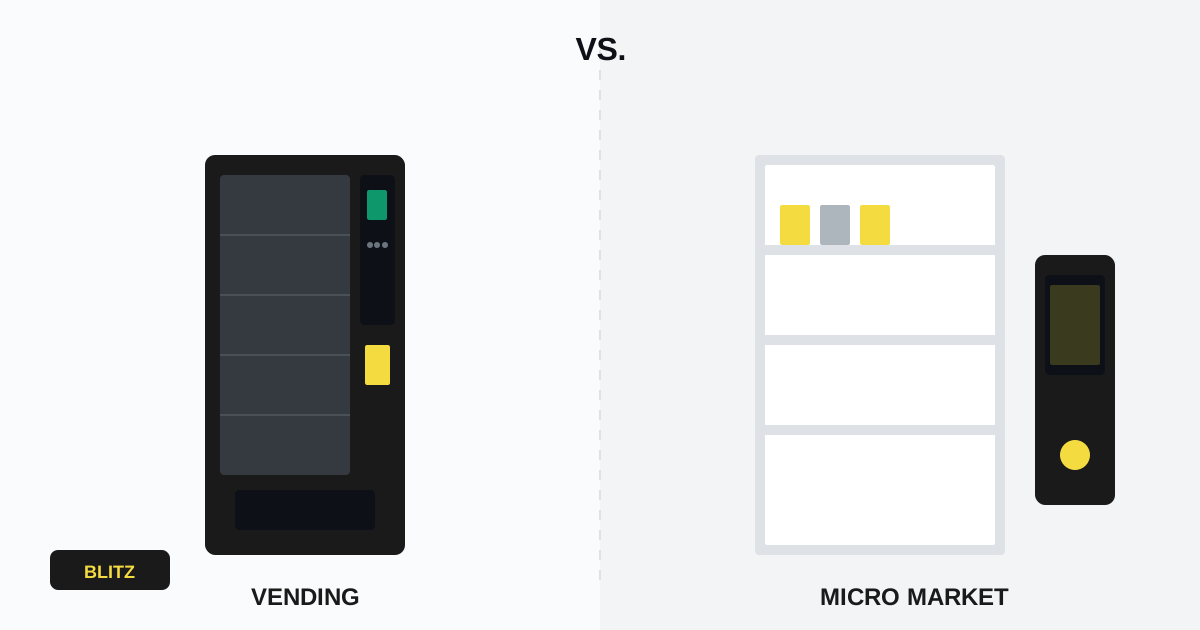
TL;DR: Micro Market vs. Vending Machine
The short answer: if your Bay Area workplace has fewer than 50 employees or limited break room space, a vending machine is the smarter choice. If you have 50+ employees, a dedicated break area, and want a café-style experience without the overhead, a micro market wins — and it’s still free to install under the full-service model.
Both options are available at zero upfront cost through Blitz Vending Services. The decision comes down to your team size, available space, and what your employees actually want.
The Comparison at a Glance
| Vending Machine | Micro Market | |
|---|---|---|
| Space required | 4–6 sq ft per machine | 100–400 sq ft dedicated area |
| Ideal team size | 30–150 employees | 50–500+ employees |
| Product variety | 30–60 SKUs | 200–500+ SKUs |
| Fresh food | Limited (some models) | Yes — sandwiches, salads, fruit |
| Payment options | Cashless, card, coin | Cashless, card, app, kiosk |
| Self-checkout | No (machine vends one item at a time) | Yes — grab and go, scan at kiosk |
| Installation cost | $0 (free placement model) | $0 (full-service model) |
| Monthly cost to business | $0 + electricity (~$40/machine) | $0 + electricity (~$80–$120/area) |
| Customization | Moderate | High |
| Looks like | Traditional machine | Convenience store in your office |
| Setup time | 1–2 days | 3–7 days |
Both are legitimate, professionally managed solutions. The right one depends on your specific situation — and in the Bay Area, both options are available through local full-service operators who handle all installation, stocking, and maintenance.
What Is a Micro Market, Exactly?
If you’ve heard the term but aren’t sure what it means: a micro market is an unmanned, open-shelf convenience store installed inside your workplace break room. Instead of items dispensed one-at-a-time through a machine, products sit on refrigerated shelves, open racks, and coolers — just like a small convenience store. Employees grab what they want and pay at a self-checkout kiosk using a card, phone, or prepaid account.
The setup typically includes:
- Open shelving for snacks and non-perishables
- A refrigerated cooler for beverages, fresh food, and dairy
- A self-checkout kiosk (usually touchscreen with cashless payment)
- Optional: fresh food section with daily or tri-weekly restocking
- Optional: hot food station (soups, instant noodles, oatmeal)
What it looks like in a Bay Area office: Imagine a 200-square-foot corner of your break room converted into a miniature Trader Joe’s — stocked with Clif Bars, KIND bars, Soylent, cold brew, LaCroix, fresh salads, sandwiches, and Greek yogurt. Employees scan items at a kiosk and tap to pay. No waiting, no sold-out buttons, no limited selection.
That’s a micro market.
According to the National Automatic Merchandising Association (NAMA), micro markets have grown to represent over 35% of workplace refreshment installations at companies with 100+ employees — largely because they solve the core complaints about traditional vending: limited variety, stale products, and the frustrating “item stuck in the coil” experience.
When a Vending Machine Is the Right Choice
Traditional vending machines aren’t outdated — they’re just optimized for a different set of conditions. For many Bay Area businesses, a vending machine is exactly the right tool.
Choose vending machines when:
Your team is under 50 people. A micro market needs enough sales volume to justify the space, the kiosk, and the restocking frequency. For teams under 50, a snack and beverage machine (or a combo machine) provides the same core benefit — snacks and drinks available without leaving the building — at exactly the right scale.
You have limited break room space. Most Bay Area offices — especially in San Francisco, South of Market, or San Jose’s downtown corridor — deal with space constraints. A vending machine needs 4–6 square feet. A micro market needs 100–400 square feet of dedicated, accessible space. If that’s not available, vending is the answer.
You want a turnkey, zero-management solution. Modern vending machines are self-contained. A cashless combo machine dispenses snacks and drinks with zero employee involvement, minimal service visits, and no shelf arrangement or open food handling. For operations managers who want zero overhead, it’s the cleaner option.
Your location has multiple dispersed zones. A warehouse in San Leandro or a manufacturing facility in Fremont might have employees on three different floors or two separate buildings. Multiple strategically placed vending machines outperform a single centralized micro market in these layouts.
You’re in a secondary location or satellite office. Micro markets are typically deployed at primary campuses. For branch offices, co-working annexes, or smaller satellite sites, a vending machine is the practical choice.
When a Micro Market Is the Right Choice
For larger Bay Area workplaces, micro markets deliver a fundamentally different experience — and the data shows employees notice.
Choose a micro market when:
Your team is 50–500+ people. This is the inflection point. Above 50 employees, the sales volume justifies the broader product selection, the fresh food restocking, and the dedicated kiosk infrastructure. Above 100 employees, a micro market typically outperforms vending on every metric that matters to employees.
Your employees want fresh food options. This is the single biggest differentiator. Vending machines can carry some fresh items (certain combo machines include a refrigerated section), but they’re limited. A micro market carries full fresh food — sandwiches, salads, wraps, yogurt parfaits, cut fruit — restocked daily or every other day. For tech companies in Palo Alto, Mountain View, and Cupertino where employees expect quality refreshments, this matters significantly.
You have a dedicated break room or café area. Micro markets work best when there’s a designated space that employees associate with taking a break. If your office has a break room that currently has a coffee machine and a microwave but nothing else, that’s a strong candidate for a micro market conversion.
You want to retain talent through workplace experience. A 2024 SHRM study on workplace benefits found that workplace food and refreshment access ranks among the top 10 factors affecting employee satisfaction at mid-size companies. In the Bay Area’s competitive hiring market — where companies like Google, Apple, Salesforce, and LinkedIn set the standard with full cafeterias — a micro market gives smaller companies a competitive workplace amenity without the overhead of a staffed café.
You want the café look without café overhead. A well-designed micro market with modern refrigeration units and open shelving genuinely looks like a high-end convenience store. For startups and scale-ups in San Francisco and Silicon Valley that care about office aesthetics and company culture, this visual upgrade matters.
What Does Each Option Actually Cost in the Bay Area?
Here’s the honest breakdown for Bay Area businesses in 2026:
Vending Machine Costs
| Cost Item | Amount |
|---|---|
| Machine installation | $0 (free placement) |
| Monthly service fee | $0 |
| Restocking | $0 (provider-managed) |
| Maintenance and repairs | $0 (provider-managed) |
| Electricity per machine | ~$30–$50/month |
| Total monthly cost to business | ~$30–$50 |
Under the free placement model, your only real cost is electricity. California’s commercial electricity rate of approximately $0.24/kWh means a single vending machine running 7–10 kWh per day costs roughly $40/month to operate.
Micro Market Costs
| Cost Item | Amount |
|---|---|
| Equipment and installation | $0 (full-service model) |
| Monthly service fee | $0 |
| Restocking (product purchases) | $0 (provider-managed) |
| Kiosk and payment system | $0 (included) |
| Electricity (refrigeration + kiosk) | ~$80–$120/month |
| Total monthly cost to business | ~$80–$120 |
The micro market’s higher electricity cost reflects its refrigeration units and always-on kiosk. The break-even point: if the added employee satisfaction, reduced off-site food runs, and productivity benefit of a micro market is worth $80–$120/month to your business, it’s a clear win. For most companies with 80+ employees in the Bay Area, it is.
Important note on fresh food micro markets: Some providers charge a small monthly fee for fresh food programs — particularly when restocking frequency is high (daily or tri-weekly). Always ask specifically whether fresh food restocking is included in the full-service agreement or quoted separately.
Real-World Use Cases in the Bay Area
Scenario 1: 45-Person Marketing Agency, San Francisco SOMA
Situation: A boutique agency in a converted loft space with limited break room. Around 45 employees, mix of remote and in-office on any given day.
Right choice: Vending machine
A combo snack and beverage machine in the existing break room nook. Zero space sacrifice, zero management, employees have access to snacks and cold drinks throughout the day. Monthly electricity cost: ~$40.
Scenario 2: 120-Person SaaS Company, San Jose
Situation: A mid-stage startup in a leased office park with a proper break room, 120 full-time employees, trying to compete with larger tech company amenities for recruiting.
Right choice: Micro market
A 200-square-foot micro market with open shelving, refrigerated cooler, and fresh food section restocked three times per week. Employees get salads, protein bars, cold brew, snacks, and beverages on-demand. Monthly electricity cost: ~$100. The company uses it as a recruiting talking point.
Scenario 3: Distribution Warehouse, Fremont (East Bay)
Situation: A logistics company with 200 workers across two warehouse floors, operating multiple shifts. Workers need quick access to food and drinks without leaving the floor.
Right choice: Multiple vending machines
Three vending machines strategically placed across both floors and near the loading dock. Accessible during all shifts. No dedicated break room space required. Restocked bi-weekly. Workers get snacks, energy drinks, and water exactly where they need them.
Scenario 4: Biotech Research Campus, South San Francisco
Situation: A 300-person life sciences company with dedicated break areas on multiple floors. Standard company culture amenities expected. Recruiting from SF Bay talent pool.
Right choice: Micro market + supplemental vending
A main micro market on the central floor with full fresh food, plus one or two combo vending machines on secondary floors for convenience. Covers all employee needs across the campus.
How Blitz Handles Both Options
Blitz Vending Services installs and manages both traditional vending machines and micro markets across the Bay Area. The process is the same for both:
- Free site assessment — We evaluate your space, team size, and traffic patterns and recommend the right solution. No obligation.
- Custom product selection — We build a product mix based on your team’s preferences, dietary requirements, and local Bay Area trends.
- Installation — Vending machines: 1–2 days. Micro markets: 3–7 days including shelving, kiosk setup, and refrigeration.
- Ongoing service — Regular restocking, maintenance, product mix optimization, and cashless payment management — all included.
- No long-term lock-in surprises — Standard agreements with clear terms, reasonable exit provisions, and SLA guarantees for repairs.
We serve offices, tech campuses, warehouses, medical facilities, gyms, hotels, and more across San Francisco, San Jose, Oakland, the Peninsula, and the broader Bay Area.
The Decision Framework
If you’re still deciding, run through these questions:
1. How many employees will use this regularly?
- Under 50 → Vending machine
- 50–100 → Either (depends on space and budget)
- 100+ → Micro market strongly recommended
2. Do you have 100+ square feet of dedicated break space?
- No → Vending machine
- Yes → Micro market is viable
3. Do your employees want fresh food?
- No / not important → Vending machine
- Yes → Micro market
4. Do you have multiple dispersed locations or floors?
- Yes → Multiple vending machines
- No → Micro market (if other criteria met)
5. Is workplace aesthetics and culture a priority?
- No → Vending machine works fine
- Yes → Micro market creates the right impression
Frequently Asked Questions
What’s the minimum company size for a micro market?
Most Bay Area providers, including Blitz, require a minimum of 50–75 consistently on-site employees to make a micro market economically viable. Below that threshold, a traditional vending machine delivers a better experience relative to the footprint required.
Can I have both a micro market and vending machines?
Yes — and for larger campuses, it’s often the best solution. A central micro market for the main break room plus strategically placed vending machines on secondary floors or in warehouse areas gives you full coverage across your facility.
Do micro markets require a dedicated attendant?
No. That’s the whole point. A micro market is fully self-service — employees shop like a convenience store and check themselves out at the kiosk. The provider handles restocking and maintenance, but no on-site attendant is needed.
How does the micro market prevent theft?
Modern micro market kiosks are designed around the honor system supported by deterrents: visible security cameras, payment-required kiosk flow, and product monitoring through inventory tracking. Industry data from NAMA shows shrinkage rates typically run 1–3% — comparable to traditional retail. For the Bay Area’s professional office environment, this is rarely a material concern.
What kinds of products can go in a Bay Area micro market?
Essentially anything a convenience store carries: energy drinks, cold brew coffee, sparkling water, LaCroix, protein bars, trail mix, chips, fresh sandwiches, salads, yogurt, fruit cups, and specialty items. We also accommodate specific requests — gluten-free, organic, vegan, or culturally specific products for diverse workforces. Many of our Bay Area clients also request locally sourced Bay Area brands.
How quickly can a vending machine or micro market be installed?
Vending machine: typically 1–2 business days from agreement to installation. Micro market: 3–7 business days depending on space prep and complexity. Contact us and we’ll give you a specific timeline for your location.
Which Option Is Right for You?
For most Bay Area businesses reading this, the answer is clearer than it seems:
- You’re under 50 people: Start with a vending machine. It’s the right scale, zero cost, zero space sacrifice, and you can upgrade later.
- You’re 50–150 people with a real break room: A micro market will genuinely change how your employees experience the office. It’s worth exploring.
- You’re 150+ people: A micro market isn’t optional — it’s the expected standard in the Bay Area talent market.
Both options are available at no cost to your business through Blitz’s full-service model. The question is which one fits your workplace right now.
Contact Blitz Vending Services for a free site assessment — we’ll tell you exactly which solution makes sense for your team, your space, and your budget. No sales pressure, just a straight recommendation.
You can also read more about how vending machine service pricing works in California or explore our full range of vending services for Bay Area businesses. Considering renting instead? See our vending machine rental vs. free placement comparison first.