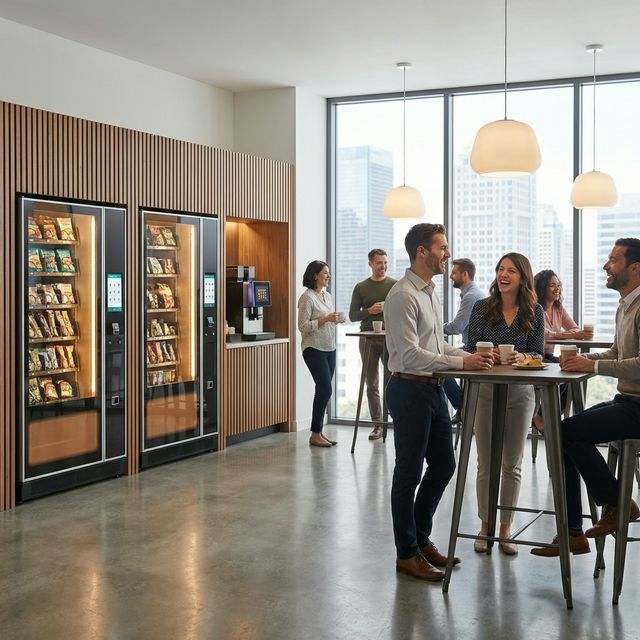
TLDR: Hospital Vending Is an Essential Healthcare Facility Service
Hospital vending machines serve a unique and critical role — they provide 24/7 nourishment for people who can’t leave the building. Patients in overnight stays, family members keeping bedside vigils, and healthcare workers on 12-hour shifts all depend on vending when cafeteria doors close. For medical facility operators, vending is a critical patient satisfaction tool and a point of comfort for everyone on-site.
Bottom line: Healthcare facilities that invest in modern, well-placed vending solutions improve patient and visitor experience while providing a professional, round-the-clock service at no cost to the administration.
Best for: Hospital administrators, medical facility managers, healthcare operations directors Key benefit: 24/7 service for patients, visitors, and staff — with zero operational burden ROI timeline: Positive patient and staff feedback from day one with no upfront investment
Why Hospitals Can’t Operate Without Vending
Hospitals are 24-hour operations, but cafeterias and food courts typically operate only 6–8 hours per day. That leaves 16–18 hours when the only food and drink options on campus are vending machines.
Consider who depends on hospital vending:
- Night-shift nurses and doctors — working 7PM to 7AM with no cafeteria access
- Families in waiting rooms — during surgeries that can last 4–8 hours
- Patients in recovery — wanting comfort snacks or beverages not on their meal tray
- ER visitors — arriving at all hours with long, anxious waits
- Administrative staff — covering evening and weekend shifts
For these people, a vending machine isn’t a convenience — it’s a necessity. The absence of reliable vending creates real hardship in an environment where people are already under stress.
The Unique Challenge of Healthcare Vending
Hospital vending is fundamentally different from office or retail vending:
- Emotional environment — people are stressed, worried, or exhausted
- 24/7 critical demand — not just convenient, but essential
- Dietary restrictions — patients and diabetic visitors need specific options
- ADA requirements — full accessibility is non-negotiable
- Infection control — hygiene standards exceed other environments
- High traffic — hospitals can see thousands of visitors daily
A professional vending partner who understands these nuances is essential.
Who Benefits from Hospital Vending Machines?
Healthcare Workers (Largest User Group)
Nurses, doctors, techs, and support staff work some of the most demanding schedules in any profession. During long shifts:
- The majority of healthcare workers report relying on vending during shifts
- Night shift workers depend almost exclusively on vending for sustenance
- Break time is limited — typically 15–30 minutes, not enough to leave campus
- Energy needs are high — physically and mentally demanding work
Well-stocked healthcare facility vending directly impacts staff morale, energy levels, and even patient care quality. A nurse who’s had a proper meal and adequate hydration delivers better care than one running on empty.
Patients (Second Largest Group)
While patients receive scheduled meals, vending fills important gaps:
- Snacks between meals for patients cleared to eat
- Beverages beyond what’s provided on meal trays
- Comfort food during extended stays
- Visitors bringing items to patients per nursing approval
Visitors & Families (High-Impact Group)
Family members and visitors often spend hours or entire days at the hospital. They may be:
- Waiting during surgery or emergency procedures
- Keeping vigil during inpatient stays
- Visiting during evening hours when the cafeteria is closed
- Traveling from out of town with no knowledge of nearby restaurants
For visitors, hospital vending machines are often their only option. The quality and availability of vending directly impacts their perception of the facility.
Strategic Placement in Healthcare Facilities
Optimal hospital vending machine placement follows patient and visitor flow:
Emergency Department Waiting Area
The highest-stress, longest-wait environment in any hospital. Visitors here may wait 2–6 hours. Vending provides comfort during extremely difficult moments.
Main Lobby & Information Desk Area
The first point of contact for visitors. Visible vending communicates that the facility cares about visitor comfort from the moment they walk in.
Each Patient Floor / Nursing Station Area
Staff and visitors on specific floors shouldn’t need to travel to the lobby for refreshment. Floor-level vending reduces traffic in elevators and hallways.
Staff Break Rooms
Dedicated machines for healthcare workers with products selected for energy and nutrition during long shifts. This is where you’ll see the highest transaction volume per machine.
Cafeteria Adjacent Areas
When the cafeteria closes, vending machines nearby become the default. Placing machines near (but not inside) the cafeteria captures after-hours demand.
Surgical Waiting Areas
Families waiting during procedures need sustenance and comfort. Vending in these areas serves a deeply compassionate purpose.
Product Selection for Healthcare Environments
Medical facility vending requires thoughtful product curation:
Healthy & Dietary-Conscious Options (40% of mix)
- Sugar-free beverages — critical for diabetic patients and visitors
- Low-sodium snacks — for cardiac-diet-aware consumers
- Protein bars — sustained energy for healthcare workers
- Fresh fruit options — where refrigerated machines are available
- Gluten-free snacks — for celiac and gluten-sensitive individuals
- Allergen-labeled items — clear labeling is essential in healthcare
Comfort & Traditional Options (35% of mix)
- Bottled water — the universal need
- Coffee and tea — hot beverages for long waits and shifts
- Chips and crackers — familiar comfort during stressful times
- Cookies and candy — comfort food has its place
- Sandwiches — for longer stays when meals are needed
Energy & Functional Products (25% of mix)
- Energy drinks — for staff on extended shifts
- Electrolyte beverages — hydration support
- Protein shakes — meal replacement during busy shifts
- Trail mix and nuts — quick, sustained energy
Important Considerations
- Label all allergens clearly — healthcare environments demand extra caution
- Include diabetic-friendly options — a significant portion of hospital visitors are diabetic
- Offer caffeine-free alternatives — for patients and visitors with restrictions
- Provide both hot and cold beverage machines — versatility matters in 24/7 environments
The Business Case: ROI for Healthcare Facilities
Numbers for a typical 200-bed hospital:
Service Impact & Utilization:
- Daily visitors and staff: 500–1,500+
- Vending usage rate: 15–20%
- Estimated interactions per day: 110–300 successful service points
- Monthly service impact: 3,300–9,000 guests and staff served
- Annual service impact: 40,000–100,000+ support moments
Hospitals are among the highest-utilization vending locations due to 24/7 operation, captive audience, and high daily traffic.
Patient Satisfaction Impact:
- HCAHPS score improvement from amenity upgrades: measurable
- Better staff satisfaction from break room quality: reduced turnover
- Visitor experience improvement: better online ratings and community reputation
Cost to Hospital:
- Machine cost: $0 (professional placement)
- Restocking and maintenance: $0 (provider handles everything)
- Electricity: ~$40–$70/month per machine
- Net impact: Maximum service value with minimal administrative overhead
Compliance & Special Considerations
ADA Accessibility
All hospital vending machines must meet ADA requirements:
- Product selection buttons at accessible heights
- Retrieval areas reachable from a wheelchair
- Payment interfaces positioned for universal access
- Clear, readable product displays with adequate contrast
Infection Control
In a healthcare environment:
- Machines should have easily cleanable exterior surfaces
- Touchless payment options reduce contact points
- Regular sanitization by the vending provider during restocking
- Placement away from sterile areas and operating rooms
Nutritional Transparency
Modern vending machines can display:
- Calorie counts per item
- Allergen information
- Nutritional facts
- Sugar content warnings
This transparency aligns with healthcare environments where nutritional awareness is important.
Implementation for Healthcare Facilities
Step 1: Stakeholder Alignment
Involve these teams in your vending planning:
- Facilities management — for space and electrical requirements
- Nutrition services — for product selection guidance
- Nursing leadership — for staff break room needs
- Patient experience — for visitor comfort priorities
- Finance — for revenue-sharing arrangements
Step 2: Select a Healthcare-Experienced Provider
Choose a vending partner who understands medical environments and offers free installation:
- Experience with ADA-compliant installations
- 24/7 emergency service availability
- Hygienic restocking and sanitization procedures
- Flexible product selection including dietary-specific options
- HIPAA-conscious service staff (discretion in patient areas)
Step 3: Phase Your Rollout
For large facilities, start with the highest-impact locations:
- ER waiting area — immediate high-impact visibility
- Staff break rooms — employee satisfaction boost
- Main lobby — visitor convenience
- Patient floors — phased rollout by wing
Step 4: Gather Feedback & Optimize
- Survey staff and visitors after 90 days
- Review sales data to optimize product mix
- Adjust placement based on utilization patterns
- Add machines where demand exceeds supply
Frequently Asked Questions (FAQ)
With professional vending services, installation is free. The provider supplies, installs, stocks, and maintains all machines at no cost to your facility. They handle the inventory and service, allowing you to provide a high-quality amenity without any budget allocation or management time.
Can we offer healthy-only vending options?
Yes. Healthy vending programs are available and increasingly popular in healthcare settings. Your provider can curate selections that meet nutritional guidelines, including sugar-free, low-sodium, and organic options. You can go 100% healthy or maintain a balanced mix.
What about machines breaking down at 2 AM?
Professional vending providers offer 24/7 emergency service for healthcare clients. Machine reliability has improved dramatically — modern machines have 98%+ uptime. When issues occur, remote monitoring often identifies problems before they affect users.
How do we handle machine cleaning and infection control?
Your vending provider sanitizes machine surfaces during every restocking visit. Machines with touchless payment reduce contact points significantly. Facilities teams can add machines to their standard cleaning protocols for additional sanitization between provider visits.
Can vending machines accept hospital employee badges?
Many modern machines can be configured to accept employee badge payments, NFC-enabled ID cards, or integrate with hospital payroll deduction systems. This provides maximum convenience for staff and can increase usage rates.
Do we need to provide anything besides floor space?
Just a standard electrical outlet (120V). The vending provider handles everything else — machine delivery, installation, stocking, maintenance, and product selection. Your facilities team simply needs to allocate the space and ensure power availability.
Support the People Who Support Others
Hospital vending machines serve the people who serve patients. They comfort families during the hardest moments. They fuel healthcare workers through the longest shifts. They provide patients a small sense of normalcy during their stay.
In healthcare, every detail of the patient and visitor experience matters. Professional medical facility vending is one of the simplest ways to demonstrate that your facility cares about every person who walks through its doors.
Ready to improve your facility’s vending program? Check if your facility qualifies or contact our team to schedule a free assessment and customized hospital vending plan. We serve healthcare facilities across the Bay Area and North Bay.